

No Brainer: Chicago Workers Better Off with Trump
Tax break on tips reveals Trump would benefit Chicago’s service workers more than Democratic globalists . . .

Like so many employees in the service industry, I thought I would work at the Allerton Hotel for a few months, but I ended up working there and at other hotels for nine years. I took the job because I was broke and had to make rent.
At first, I barely made any money, and I was completely overwhelmed “working the door.” People would pull up to park, hand me their keys, then walk away. Dozens of people asking me questions and directions. Traffic in front of the hotel backed up. The beat cop on the corner didn’t like it and had some words for me. Desperate, I went into the lobby and asked Ike, an older African American bell captain, to help me out.
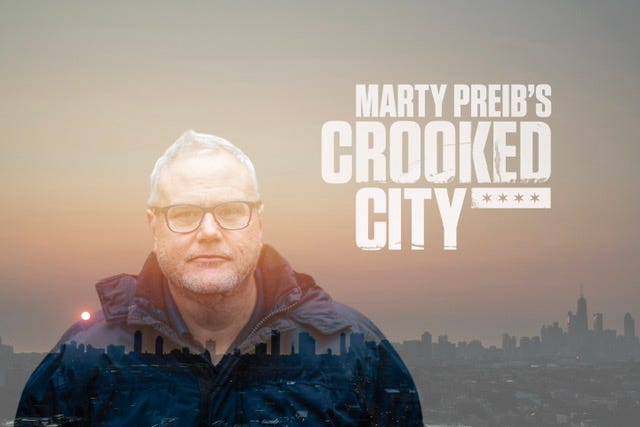
Ike’s mentoring became pivotal in my knowledge of the city. He had migrated to Chicago decades earlier from Mississippi, where working on his uncle’s farm on a hot summer day, he said he had enough. A few days later he was on a bus to Chicago.
“Preib, no one walks in or out of this hotel you don’t make at least two dollars,” Ike told me when he came down to the front of the hotel to begin my lessons.
Ike seemed to know every manager or maître d’ in the city. He knew the address of every hotel and restaurant and even the menu of those restaurants. When people checked out on Sunday mornings, there was line of people in the lobby waiting to give Ike a tip for the restaurant recommendation he gave them or for getting them a reservation during peak hours.
Ike taught a very naïve young guy new to the city and a recent college graduate how to talk to people. He taught me a series of elementary “hustles” that made being a doorman quite lucrative during the busy periods.
Ike taught me, for example, when it was raining and there was a line of guests waiting to get cabs, a good doorman folded up a one-dollar bill in his hand that couldn’t be seen. After waving down a cab and holding the door open, the doorman turned his body to the guests as they got in the cab. Sometimes the people tipped. The doorman made sure the others in line saw that they had tipped, but if they didn’t, the doorman pulled out the hidden dollar bill as he turned back to the crowd, creating the illusion that he had been tipped. The doorman folded the dollar bill and put it in his pocket. Everyone waiting in line pulled out money for a tip in imitation.
Ike taught me that every person going to O’Hare Airport should result in ten dollars for the doorman. What? I asked. Ike explained.
The guests would often complain about the cabs in those days. A good doorman would suggest to every person arriving from O’Hare that they book a private town car back to the airport instead of a cab at only about $5 more than cab fare. A comfortable Lincoln Town Car with a driver the doorman vouched for? Sure, the guest said. The doorman then booked a ride with one of the dozens of town car drivers he worked with. That extra $5? It was handed back to the doorman by the limo driver when the guest wasn’t looking, often set in the trunk where the doorman was loading the luggage, as a commission. The guest’s gratitude for not having to ride in a cab generally resulted in a $5 tip. Ten dollars a ride to O’Hare.
Conventions are the heart of the city of Chicago’s business and its greatest tax generator. The city is flooded with conventioneers during the busy season. Many conventioneers do their best business at dinners after meeting potential clients at the convention center.
By the time they get back from the convention center, McCormick Place, they realize getting a dinner reservation is no easy task. No one is going to impress a client or close a deal with 9 p.m. dinner reservations. In desperation, guests would often ask the doorman if they knew of any restaurant, even a lesser-known one, where they could get in at peak time, around 7 p.m.
For a good doorman, opportunity now knocks.
“Tonight?” he asks.
“Yes, tonight,” the quivering guest says, wondering if he will lose thousands in business because of a dinner reservation.
“How many?” the doorman asks.
“Seven,” the guest whispers.
“Seven?” the doorman says, whistling in disbelief.
“I’d really appreciate it,” the guest begs.
“There’s a lot of people in town,” the doorman says. “What kind of food?”
“I don’t care, steaks, Italian, whatever,” the guest says.
“Well, that’s a tough one. I’ll tell you what. Manager over at Carmine’s owes me some favors. I can cash some in and see if he can get you in tonight, but no promises. What’s your room number? I’ll call you when I find out,” the doorman says.
What the guest doesn’t know is that restaurant managers all over the city work closely with doormen, because so many people approach doormen for restaurant recommendations. A doorman can send as many as 200 people a month to a restaurant. So managers keep in touch with doormen. They hold some tables during busy times for just such occasions, knowing that, in return, the doormen will keep sending people during the slower times as well.
I called Benny, the manager at Carmine’s, an Italian restaurant right on Rush Street.
“Benny, Marty. I really need a seven top at seven. Can you help me out?”
“No problem, Marty.”
“Well, Benny is a great guy and really came through for me tonight,” the doorman says after he calls the guest in the room. “I got you a seven top at seven. See me when you want a cab so I can give the address to the driver, okay?”
Not giving away the address to the guest forces the guest to confront the doorman on his way out and ensure a tip for doing such a huge favor to the grateful guest, often a twenty spot for making one simple phone call.
These were just a few of the doorman hustles Ike taught me.
In the years Ike and I worked together at the Allerton, we went to countless free dinners from grateful managers, who would often refuse to give us a menu and instead just keep bringing us food and drink.
The service industry was hard, physical work, and in the winter months, business dried up. You had to stand for hours on the concrete in the blistering summer heat and the vicious Chicago winters, rain or shine. Many people treated you like dirt. No conventions were scheduled and no one wanted to visit Chicago in January and February, so those were some lean days.
After a long day hauling bags, answering the same questions over and over and standing outdoors for hours, Ike and I would head over to Streeter’s Tavern and start drinking some beers, our joints aching from so much physical work.
Many service workers don’t get medical insurance, paid days off, or paid vacations. There is no pension. The waiters and bartenders throughout the city get paid only when they work, and their work is governed by the cycle of trade and tourism business. There was a wide disparity between the conditions of service workers and the amount of money their labor brought to the city in revenue and taxes.
In the years I was a doorman, I got to know the union that “represented” service workers throughout Chicago, the Hotel Employees and Restaurant Employees (HERE) Local 1. In fact, I was part of a group that led a reform movement to oust the leadership of the union that had been running the union for decades, a leadership cited by many as one of the most corrupt in the country.
At that time, HERE was more of a labor broker than it was a labor union: It brokered the labor of its members for the benefit of its labor leaders. It was also a union firmly entrenched in the Democratic political machine of the city. The union fat cats, with ties to organized crime, garnered lousy contracts with low wages, terrible representation, and crummy medical care, despite the fact that the room rates and taxes in Chicago were among the highest in the country. Everyone benefited from trade and tourism in Chicago except the workers.
The most abused members were the housekeepers in Chicago, women who conducted the backbreaking work of cleaning sixteen rooms a day within an eight-hour shift. You can see them in any hotel, virtually running from room to room to fulfill their quota. If you ever stay at a hotel and don’t tip the housekeeper generously, you are, in my opinion, a cold-hearted SOB.
In two union elections, we gained power, so that by the third, it was an extremely tight race. We believed we were in range of winning. At least we thought so. In those days, we were too naïve about the alliance of labor unions to the Democratic Party and the fact that labor unions run the most notoriously corrupt elections. These tactics, when they prove successful, are later embraced by Democrats in political elections.
Even so, we came close to victory in the third election, so close that the management at the Hyatt Regency in Chicago called the police because the two opposing parties of the union squared off in the hotel where the final ballots were being held. The old guard wanted to take possession of the ballots to transport them, but we weren’t letting them out of our sight.
The memories of those years working as a doorman coming to learn the real nature of the service industry in a place like Chicago came back to me when I heard President Trump announce that he would make tips earned by service workers tax free. In a podcast on John Solomon Reports, a guest speaker said Trump got the idea of eliminating taxes from tips during a casual conversation with a waitress.
For all the years Chicago has built its financial foundation on the labor of its service workers, for all the union leaders who have represented these workers and the politicians who have benefited from support by that union and those workers, how could such a simple idea never have come to light? Couldn’t these groups see how little money service workers, union and non-union make, how few benefits they enjoy, how many injuries arise from the physical toll of labor?
How could this alliance of labor unions and the Democratic Party not have conceived of this notion and put it into law? Why did it come from a Republican candidate?
Trump’s promise to end taxes on tips signifies a fundamental change in the power structure of the American political system. It isn’t just service workers and tips. Across the board, Donald Trump has posited a vision of politics in which all blue-collar workers would benefit from his leadership and suffer at his failure to secure the presidency. In this vision, the ancient alliance between Democrats and labor has been shattered.
This is why teamster president Sean O’Brien speaking at the Republican National Convention is, in truth, almost revolutionary. Some labor leaders seem to get it. Most are sticking with the old order.
Instead of a tax break for their workers, the Democrats announced a massive hiring of IRS investigators. Trump uses the power of tariffs to protect American jobs. Democrats prattle on about a global system. Trump promises to protect the border from a massive influx of workers whose competition for native jobs will chronically drive down wages. He promises law and order so that the commute to and from work every day isn’t a life-threatening undertaking.
It isn’t just talk, either. He already implemented such policies before he was ousted from office in an election that had all the suspicious tactics of a union election.
Trump has done something no other Republican has done so well: He has torn apart the alliance of labor and the Democratic Party, a corrupt cronyism. His promise to make tips tax free makes a mockery of this alliance in Chicago. Why did they never push this idea? The scores of waiters, bartenders, and busboys throughout the city would crave such a benefit, no matter how much their labor bosses stick to endorsing their Democratic overlords.
Trump’s promise to end taxes on tips adds to the growing evidence that American workers, whether union or not, would be utter fools to vote Democrat in the next election.
That’s a lot of votes.
Right in the center of a Democratic stronghold like Chicago.